

Environmental Lessons
How to teach really engaging computing lessons about e-waste and environmental issues
Your students already care about phones, streaming, gaming, AI and the cloud. However, a common misunderstanding is that some of this is just “data” and therefore it doesn’t have an environmental impact.
Instead of thinking of some technology as “only data” we need to show students that data still needs to be stored somewhere, so there’s still a physical element and those physical elements have an environmental footprint.
This post is for busy UK secondary computing teachers who want something engaging, curriculum-friendly and genuinely useful. You’ll get a handful of surprising facts you can drop into lessons plus practical classroom tasks you can run without too much prep.
The internet is not weightless
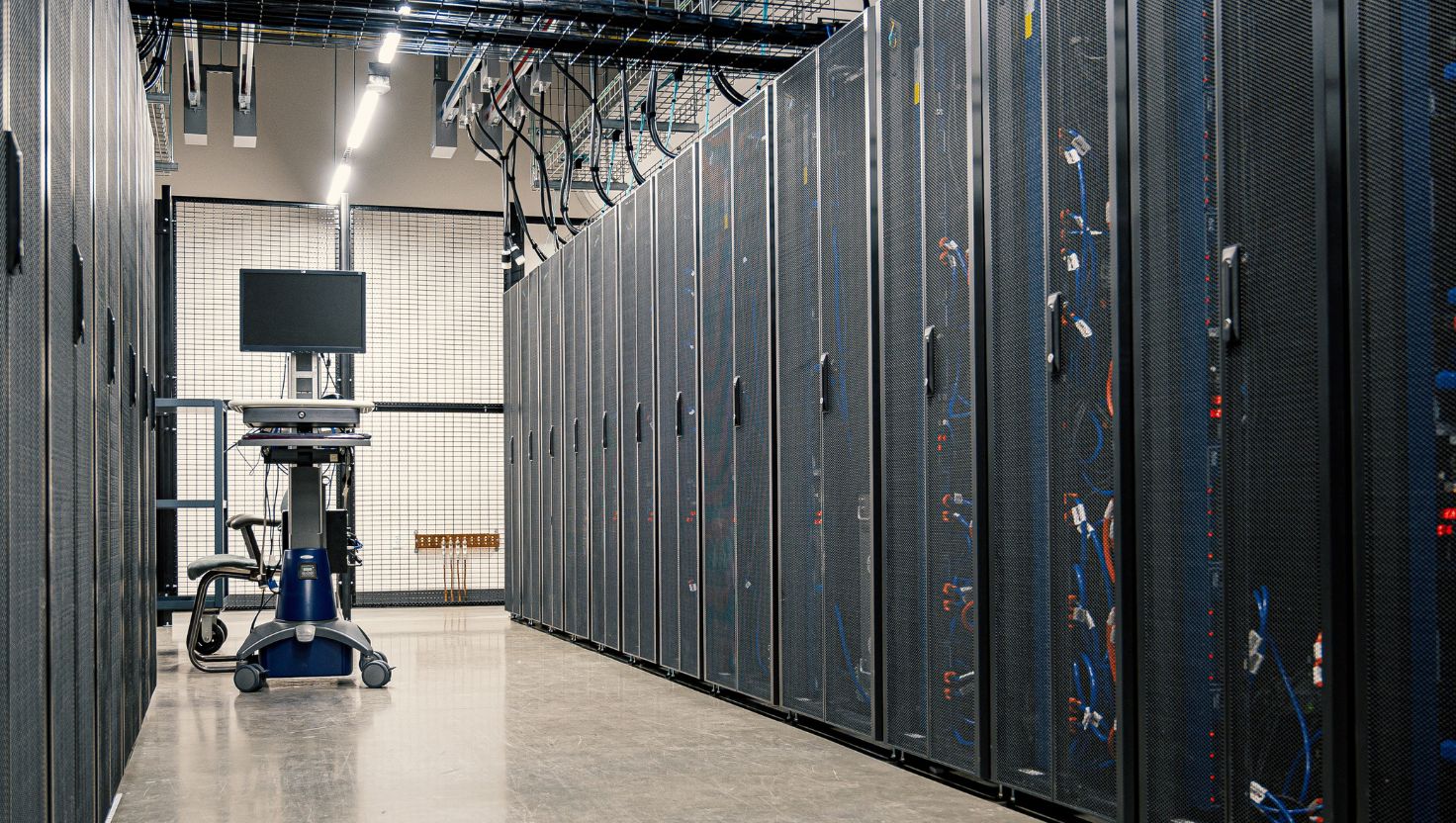
Every click ends up somewhere. Data needs to be stored on servers which in turn require, cooling, electricity, water, shipping, mining and eventually they need to be disposed of.
The digital world is growing fast and it is easy to assume it is “clean” just because we cannot see what happens behind the scenes.
Fact 1: the ICT sector has a real climate footprint
The global ICT sector’s emissions are often estimated at around 1.5% to 4% of global greenhouse gas emissions, this is similar to the emissions caused by the aviation industry.
Fact 2: data centres and networks use a meaningful share of electricity
The International Energy Agency estimates that data centres and data transmission networks accounted for around 1 – 1.5% of global electricity demand in 2022. That is roughly the same as the total electricity used by the whole of Spain in a year for everything, not just computers.
Devices do most of their damage before you even turn them on
Students tend to focus on electricity use. That is understandable because it is the only part they can imagine. But for many devices, the big environmental effect happens much earlier.
Fact 3: manufacturing and supply chains are a big part of the footprint
For laptops, most of their lifetime emissions come before you even switch them on. Roughly 75 to 85% of a laptop’s total carbon footprint can come from manufacturing and shipping, with the remaining 15 to 25% coming from electricity used during day-to-day use over its lifetime.
Fact 4: water is used in the manufacturing of technology
Water is used throughout technology manufacturing to mine and process raw materials, produce chips and screens in ultra-clean factories and to wash, cool and manage chemicals during production so components are made to a high standard with as few defects as possible. Manufacturing a single smartphone can use around 12,000 to 14,000 litres of water.
E-waste: toxic, valuable and growing fast
E-waste is not just messy. It is chemically nasty and economically absurd. Whilst recycling exists, collection, sorting and proper processing are not happening at the scale we need.
Fact 5: the world is producing huge volumes of e-waste
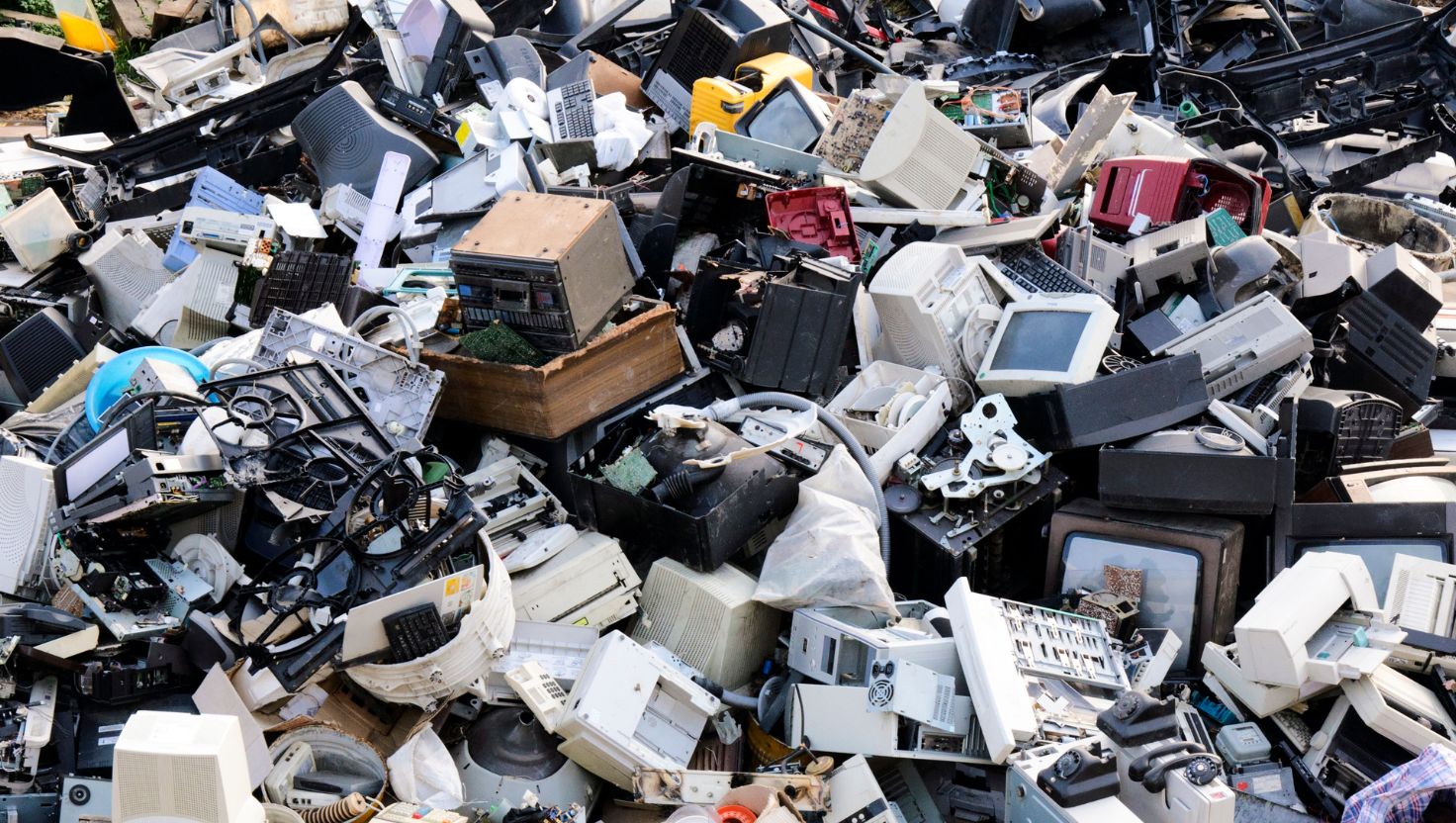
In 2022, the world generated 62 million tonnes of e-waste. Imagine 1.55 million fully loaded 40-tonne lorries of old phones, laptops and cables. That’s the amount of e-waste the world produced in 2022.
Fact 6: most e-waste is not documented as properly recycled
Only 22.3% of e-waste in 2022 was properly collected and recycled, the rest (77.7%) mostly ended up in places like these:
Binned with normal rubbish and sent to landfill or burned
Left in homes, schools and offices in drawers, cupboards and “junk boxes” because people do not know where to take it
Taken apart by unofficial recyclers where it is not done safely
So, it did not disappear. It just wasn’t recycled through the official system, which means a lot of it was wasted or could cause pollution.
Fact 7: E-waste can contain hazardous materials
E-waste can contain lead (used in solder and circuit boards) which can harm the nervous system, kidneys and reproductive system, mercury (used in some electrical equipment such as switches and relays) which can damage the nervous system and affect brain development and cadmium (used in batteries) which can damage kidneys and the respiratory system
Fact 8: old phones contain precious metals
There is far more value in old devices than students expect. A tonne of smartphones can contain 100 to 300 times more gold than a tonne of high-quality gold ore. The Global E-waste Monitor reports that the 2022 e-waste contained $62 billion worth of recoverable natural resources.
Fact 9: the UK has specific rules for electrical waste
The UK has regulations covering waste electrical and electronic equipment. The rules mean companies that make and sell electrical items must help pay for them to be collected and recycled properly instead of being dumped in landfill.
Using technology
Using technology can feel low impact because it is mostly clicks and streaming, but every action relies on electricity-hungry networks, data centres and devices that all leave a measurable environmental footprint.
Fact 10: a lot of stored data is never used again
The term “dark data” is commonly used to describe data that organisations collect, process and store but do not use. Some researchers say that more than half of an organisation’s data is “dark data” meaning it gets stored but not really used.
AI systems
AI can feel like a simple chat box or a quick button click, but training and running large language models relies on powerful data centres that use significant electricity and need cooling, so the environmental impact is real.
Fact 11: training large language model AI systems uses a lot of resources
To train GPT-3 (2020) about 552 tonnes of CO₂e were produced. That is about the same as a petrol car driving 3.2 million kilometers (approximately 80 times around the Earth).
Fact 12: Water is used to cool systems
Training large language models requires millions of litres of water, primarily for cooling data centre servers and producing the electricity that powers them. GPT-3 Training was estimated to consume roughly 700,000 litres of freshwater during its pre-training phase.
It’s not all doom and gloom, technology can also benefit the environment
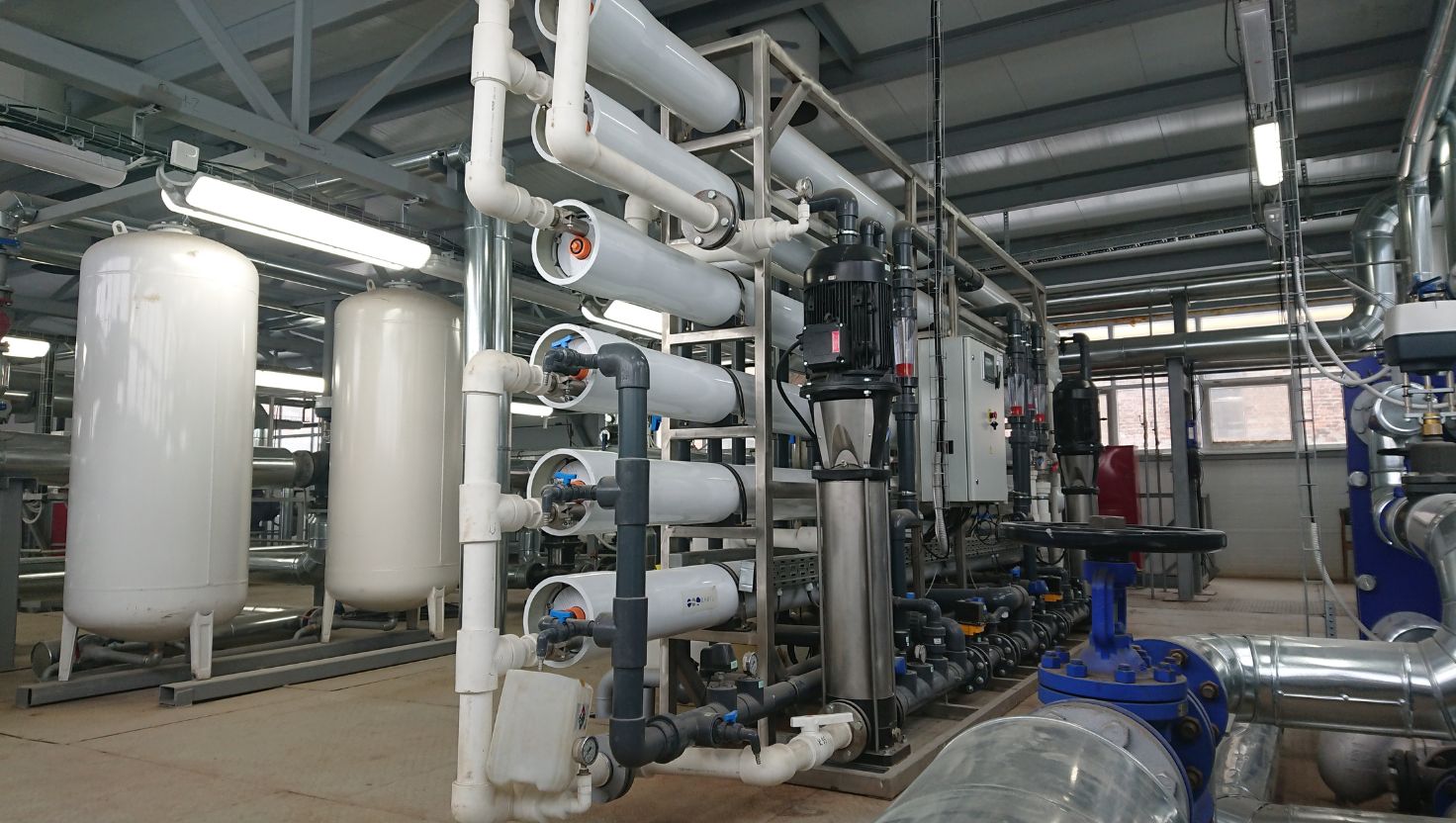
When technology is designed and used well, it can cut waste, improve efficiency and support smarter decisions that reduce environmental impact.
Fact 13: smart systems can reduce energy waste in buildings
Smart building systems can cut wasted electricity by noticing when rooms are empty and automatically turning down the heating or air con and switching off lights. In one real study, using occupancy sensors in office meeting rooms reduced energy use by about 22% because the building stopped heating, cooling and lighting rooms when nobody was in them.
Fact 14: remote work can reduce commuting emissions
A major benefit of remote work is reduced commuting, which can reduce transport emissions. If someone in the UK works from home instead of commuting, they can save about 300 kg of CO2e in a year just from not travelling to work.

Classroom-ready tasks you can teach in computing lessons
These are designed to be low-prep, high-engagement and easy to adapt for KS3 or GCSE.
Task 1: the invisible footprint starter question
Which has the bigger footprint:
sending an email,
streaming a video or
buying a new phone?
Students rank the three.
The biggest impacts are often in manufacturing and high-data activities.
Quick follow up discussion: why do we underestimate digital impact?
Task 2: the circular economy design brief
Brief: Design a school policy for devices that reduces e-waste.
Include:
Repair and refurbishment routes
Donation routes
Secure wiping and data protection
Certified recycling
Support it with one or two facts from above, for example the 62 million tonnes figure and the 22.3% documented recycling rate.
Students must justify each policy choice with a reason that links to either pollution, resource value or energy use.
Task 3: the dark data clean-up challenge
This teaches digital literacy whilst also talking about sustainability.
Students list what they store on their phone or cloud accounts: photos, screenshots, duplicates, old downloads, unused apps.
They categorise files into:
Keep forever
Keep for now
Delete
You can link this to GCSE computer science by looking further into to privacy and security. What data should never be stored unencrypted? What should be backed up? What should be deleted quickly?

Task 4: streaming calculations
Scenario: a household streams 2 hours a night.
Give students typical data usage figures for SD, HD and 4K from a streaming provider.
Students calculate weekly and monthly data usage.
Discuss effects: more data traffic means more processing, transmission and storage.
Students write a short recommendation for a family trying to reduce their footprint without becoming miserable. They should aim to make it realistic and can suggest things like:
turning off autoplay,
downloading over Wi Fi,
using HD instead of 4K on a phone and
deleting unused apps.
Task 5: mini debate
Motion: “Schools should ban unnecessary technology upgrades.”
Split the room.
One side argues for longer device lifespans.
One side argues for upgrades for security, accessibility and performance.
Summary
Your students know technology runs on electricity and devices, but it is still easy to underestimate the environmental footprint because so much of it happens out of sight. The cloud feels instant, streaming feels normal and upgrades feel routine, yet behind each of those are data centres, cooling systems, supply chains, mining and a growing pile of e-waste.
If you want students to take sustainability seriously in computing, the key is making the hidden parts visible. Data still lives on physical servers, devices carry a big manufacturing footprint and e-waste is both toxic and valuable. When you pair those facts with practical tasks, students can dive deeper and instead of giving vague opinions they are prepared with proper facts and concrete ideas they can understand.
They start asking better questions about design, upgrades, storage, repair, recycling and what “efficient” really means in the real world.
FAQs
1) Why does “the cloud” have an environmental impact?
Because cloud storage still relies on physical infrastructure. Data is stored on servers in data centres that use electricity to run and cooling to prevent overheating so there is a real carbon footprint behind everyday online activity.
2) What is e-waste, and why is it such a big deal?
E-waste is discarded electrical and electronic equipment like phones, laptops, chargers and cables. It matters because it can contain hazardous materials, it contains valuable metals that could be recovered and the amount produced globally is increasing each year.
3) Is using a device worse for the environment than buying a new one?
Often, buying new is the bigger impact. For many devices, a large share of lifetime emissions comes from manufacturing and shipping, with a smaller share coming from electricity used during day-to-day use. That is why keeping devices for longer, repairing them and buying refurbished can reduce overall impact.
4) What can schools actually do to reduce e-waste?
Schools can create a simple process for their old technology:
repair where possible,
refurbish and redeploy within school,
donate working devices,
securely wipe data then use certified recycling for anything that cannot be reused safely.
5) What is “dark data” and why should students care?
Dark data is data that gets collected and stored but not used. It matters because storing and moving data still uses electricity so deleting duplicates, old downloads and unused files can reduce waste and support better digital hygiene.

